in Stockholm
 View Portfolio |
 Inside Time |
 Shows |
 About/Contact the Artist |
Professor Elizabeth Blackburn
winner of the Nobel Prize!
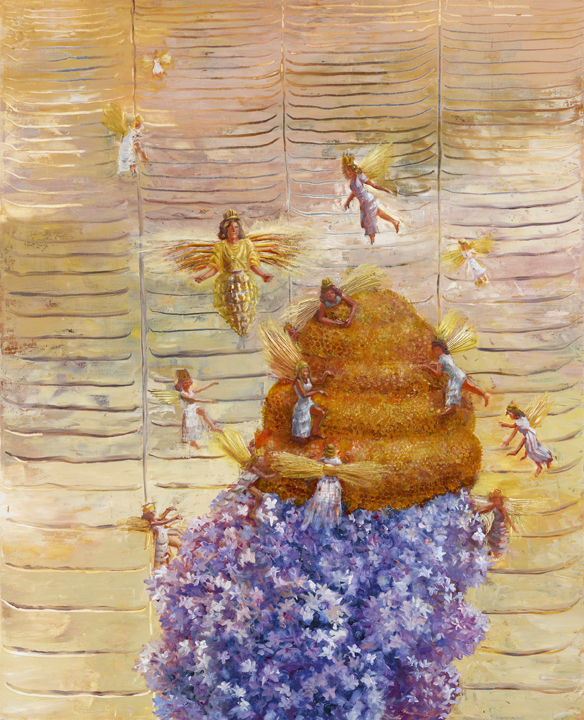
A Swarm of Bee Goddesses Tending a Telomere
painting by Julie Newdoll
An image of this painting was used in the Nobel Prize speech by Elizabeth Blackburn. The purple flowers in this painting represents the end of a condensed chromosome, capped off at the end with a hive that symbolizes a telomere. Telomeres in part serve to protect each chromosome by preventing them from unravelling, sticking to other chromosomes, being chewed away by enzymes and the like. Various proteins, such as telomerase, help to protect the telomere and lengthen it when needed. The most current
|